
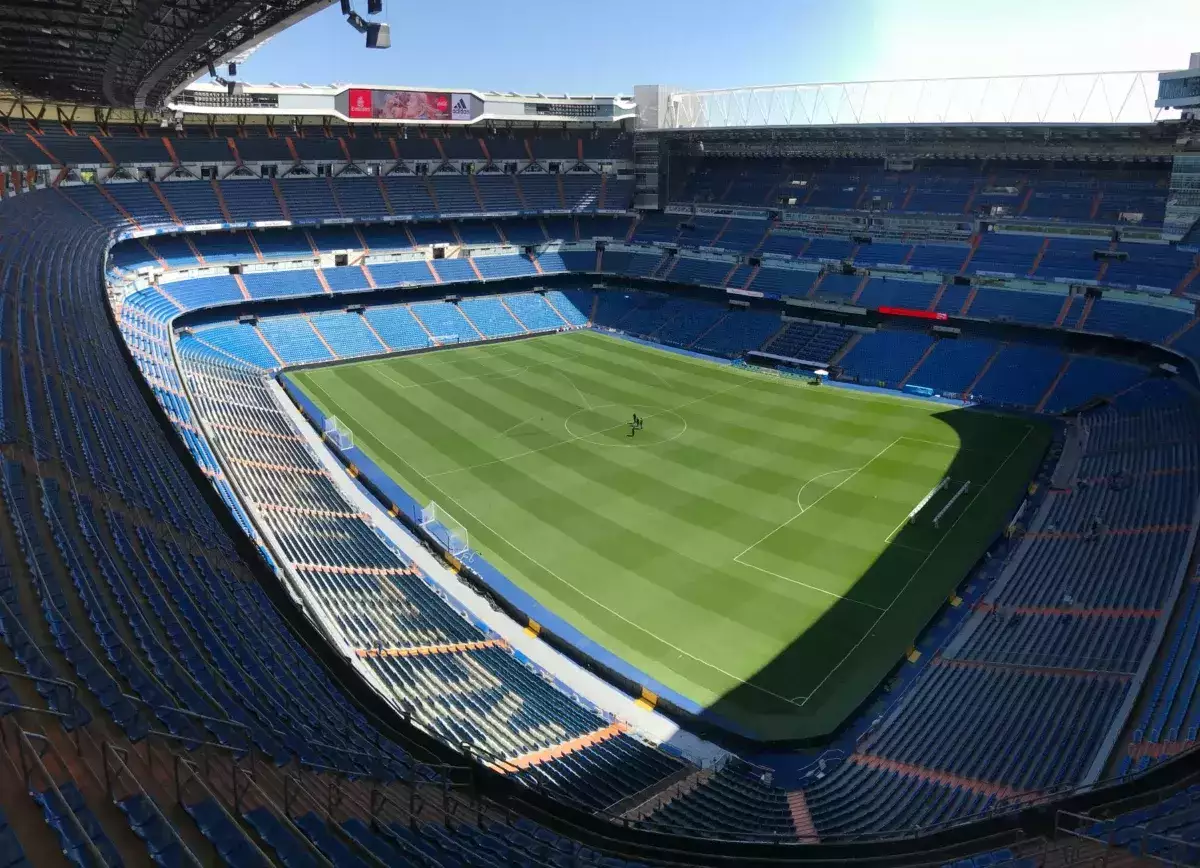
Jose Mourinho kicks off his second spell at Real Madrid in the Champions League against former club Inter Milan, a reunion staged 16 years after he lifted the European trophy with Inter at the Bernabeu in 2010. The match matters now because Madrid’s supporters and leadership expect continental trophies, while Mourinho’s reputation hinges on whether he can reproduce elite-level game management on a stage where margins are small. With Madrid and Inter both drawn into the same high-stakes knockout-or-fail cycle, the fixture becomes a test of timing, tactics, and temperament rather than a mere narrative throwback.
Context: Mourinho’s two European identities
Mourinho’s career at the top of European coaching has two defining Champions League chapters. UEFA records list him as the manager who won the competition with FC Porto in 2004 and Inter Milan in 2010, the latter culminating in triumph at the Bernabeu. That history created an enduring link between Mourinho’s most successful European style—structured, pragmatic, and ruthlessly decisive—and the venue where it began to feel permanent.
Real Madrid, meanwhile, arrives with a different kind of pressure. The club has won the Champions League 15 times (including the 2014, 2016, 2017, 2018, 2022 and 2024 titles), and it measures seasons by trophies, not progress. Mourinho’s appointment therefore functions as both an attempt to correct perceived continental shortcomings and a deliberate statement: this is a coach trusted to manage knockout tension.
Inter’s presence sharpens the stakes. Inter’s 2010-era identity—compact lines, tactical discipline, and payoff moments—resembles the blueprint Mourinho has repeatedly relied on in Europe. The match is thus less about nostalgia and more about whether Real can impose its attacking rhythm without sacrificing the defensive compactness that Mourinho typically demands.
A Champions League reunion, 16 years later
The immediate headline remains straightforward: Mourinho returns to the Champions League with Inter in his path, restarting a storyline that began with Inter’s 2010 success in Madrid. In that sense, the fixture acts as a controlled stress test for his second Real Madrid tenure—one that offers no time to build familiarity through gradual matchups.
Still, the most important factor may be psychological rather than symbolic. Mourinho built many of his reputations on teams that stayed difficult to break, especially in matches where the opponent controlled territory. Inter, under its modern structure, has leaned into speed and verticality at times; Mourinho will therefore need to ensure Real’s midfield spacing prevents transitions from becoming an automatic threat.
Real’s task also differs from 2010 Inter. Mourinho’s former sides often accepted that possession would be managed rather than chased. Madrid, by contrast, frequently carries the expectation to dominate the ball and convert chances at higher volume. The question becomes whether Mourinho can adapt his European caution to a squad that is culturally and strategically trained to press and attack from control.
Tactical lens: control, pressure, and set pieces
Mourinho’s most consistent tactical advantage in the Champions League has been the willingness to treat matches as solvable problems. He typically prioritizes defending distances—keeping the team compact in front of the back line—then creating structured routes to strike, often through transitions or set-piece value. Coaches and analysts repeatedly credit him with game-state management, even when overall possession tilts toward the opponent.
In a match like Real vs Inter, tactical details likely decide the first 20 minutes. Real’s midfield has to answer a classic Inter question: whether the full-backs can push without leaving the inside channel exposed. Mourinho often uses opponents’ pressing cues against them—if the opponent jumps, he wants runners to occupy the spaces behind the first line.
Set pieces also remain a credible leverage point. Mourinho’s teams historically benefit from the chaos and misalignment that set-piece situations create; at Champions League level, that single scoring pathway can swing a tight group or knockout tie. For Real, controlling second balls and managing zonal assignments will be as important as their ability to win the initial duel.
Inter’s counter-story and Real’s selection questions
Inter brings a second angle: the ability to hurt teams that commit bodies forward. Modern Inter phases can resemble the profile Mourinho succeeded with in 2010—efficient transitions and targeted pressure. If Real’s build-up slows or loses its first-pass clarity, Inter’s runners can turn defended space into immediate danger.
Real’s selection decisions therefore carry extra weight under Mourinho. The balance between pressing intensity and defensive coverage will affect everything from off-ball rest to counterpressing effectiveness. If Real pushes too many players into the first line without the right rotations, Inter’s direct progress can force Mourinho into reactive substitutions early.
There is also a human element that Mourinho will likely exploit: familiarity with former club dynamics. Having coached at the highest level within Inter’s culture, Mourinho can anticipate habits—when Inter chooses to slow the game, when it accelerates, and how it responds to going behind. That doesn’t guarantee an advantage, but it reduces the unknowns.
What the data says about Mourinho’s European approach
While individual match stats fluctuate by season, Mourinho’s Champions League profile is widely consistent: structured defensive organization, high value placed on tactical fouls when necessary, and readiness to protect leads or narrow margins. UEFA’s competition records and official coaching profiles underline the historical pattern of him winning the tournament with teams that were not purely dominant in possession.
Real’s challenge will be to avoid confusing
Frequently Asked Questions
Why does this Inter match feel like more than a reunion for Mourinho?
Because it tests whether Mourinho can control elite margins in a setting where Real Madrid’s standards are trophy-based. The article frames the game as a “timing, tactics, and temperament” check, not just nostalgia. With both teams trapped in a knockout-or-fail mindset, even small defensive mistakes or poor in-game adjustments can decide the tie early.
Can Mourinho’s pragmatic Champions League style work with a Real Madrid squad expected to dominate possession?
The main doubt is cultural and tactical: Real often carries an expectation to press, attack from control, and generate chances at high volume. Mourinho historically accepted that possession could be managed rather than chased. The question is whether he can keep his compact, solvable-problem approach without neutering Real’s natural rhythm and attacking output.
How might Real’s full-backs be affected by Mourinho’s need to defend against Inter’s vertical transitions?
Inter’s modern identity includes speed and direct play, which punishes defensive overextension. In the first 20 minutes, Mourinho will likely focus on defending distances and preventing inside-channel exposure when full-backs push. Real’s midfield spacing and runner timing become crucial: if the midfield line gets dragged, transitions can turn into immediate chances for Inter.
What tactical question will decide whether Real can impose its attacking rhythm without breaking Mourinho’s defensive compactness?
Real’s challenge is to attack with structure while still staying compact in front of the back line. The article highlights that Mourinho often turns matches into structured strike routes via transitions or set pieces. So the key question becomes whether Real can increase pressure and chance creation without sacrificing the defensive “distances” that prevent Inter from hitting the payoff moments.
Why are set pieces repeatedly important in Mourinho-style Champions League matches for this kind of tie?
In tightly managed knockout games, open-play advantages can be scarce, so set-piece value rises. Mourinho’s teams often look for structured, repeatable ways to turn small tactical moments into goals. The article suggests transitions and set pieces are credible leverage points, meaning dead-ball situations can become a decisive swing factor when both sides are wary of conceding space.