
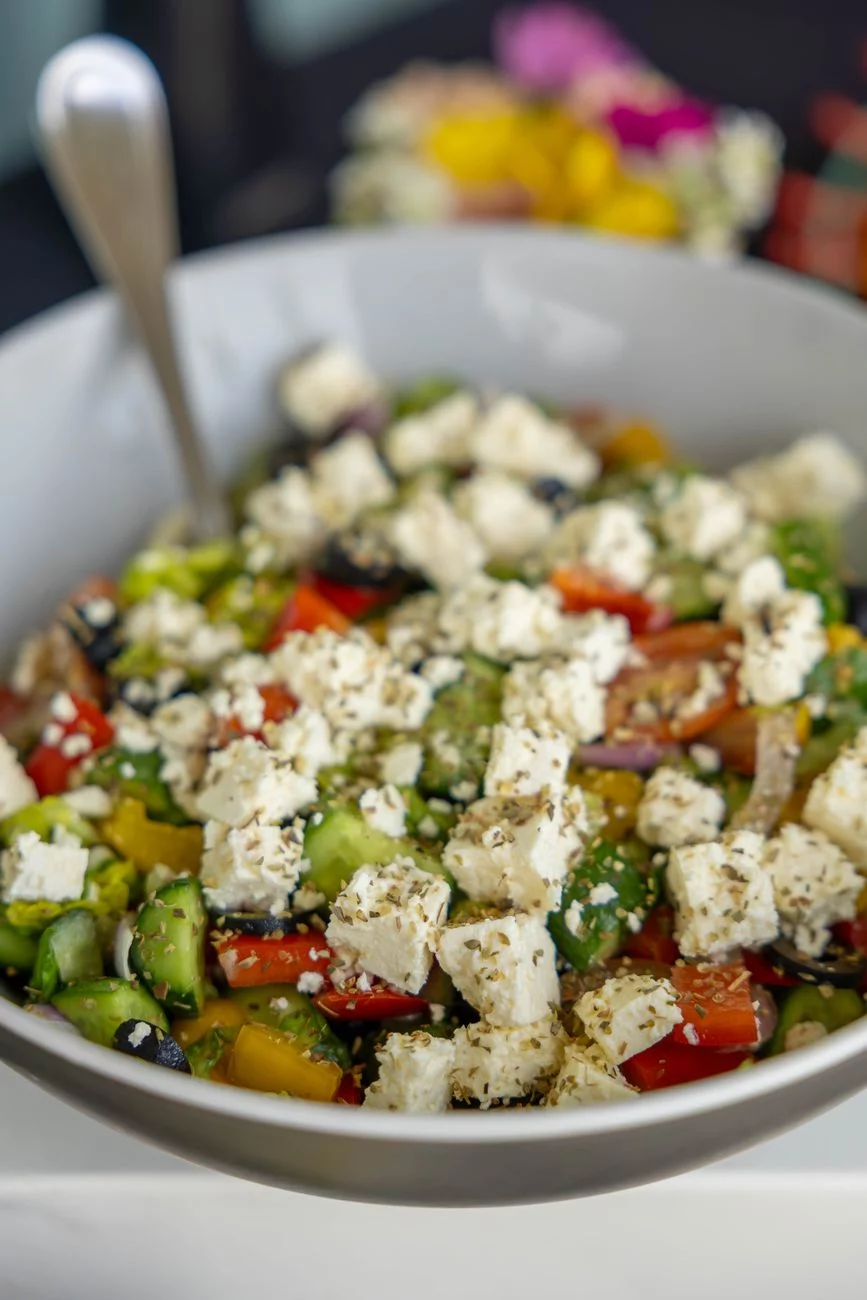
Mediterranean cucumber salad is a fast side dish built on contrast: crisp cucumber, sharp red onion, briny feta, and a lemon-garlic dressing that stays light instead of greasy. In this article, you will see why the formula works, which ingredients are essential, which swaps still make sense, and how to keep the salad fresh without diluting the flavor.
Key Takeaways
- The salad works because water-rich cucumber needs acid, salt, and fat for balance.
- Fresh dill and mint add sharper Mediterranean character, but dried herbs can still work.
- Feta is not optional if you want the same flavor profile; adjust salt if you replace it.
Why does this salad feel so refreshing?
The core logic is simple. Cucumbers bring crunch and moisture, while lemon juice and olive oil give the dressing enough structure to coat the slices without weighing them down. The result is a salad that reads clean, not creamy.
That balance is also why this recipe fits modern meal planning: it works as a side for grilled fish, chicken, or kebabs, but it also stands alone for lunch. For nutrient context, USDA FoodData Central cucumber nutrition data shows cucumber as a very low-energy vegetable, which matches its role here as a volume ingredient rather than a heavy base.
Which ingredients matter most?
Feta is the main source of salt and depth, so if you remove it, the dressing needs more seasoning. Dill and mint are the most distinctive herbs because they push the flavor toward a true Mediterranean profile instead of a generic cucumber salad.
What can you swap without breaking the recipe?
Use English, Persian, or Lebanese cucumbers, but peel thicker skins if they taste tough. If fresh lemon is unavailable, use a mild vinegar such as white wine or apple cider vinegar. Dried oregano can replace fresh herbs in a pinch, though the salad becomes less bright and more pantry-driven.
How do you keep the texture right?
Toss the salad just before serving if you want maximum crunch. If you let it sit longer, the cucumbers release liquid and become semi-pickled, which is not a mistake; it is simply a different finish. That second version is useful if you want a softer, more seasoned salad for wraps or grain bowls.
Make it once with the standard formula, then adjust only one variable at a time: herb choice, acid source, or resting time. That is the fastest way to get a version you will actually repeat.
Frequently Asked Questions
Should I salt the cucumbers before mixing the salad?
Not necessarily. The salad is designed to stay crisp and light, so pre-salting is only useful if your cucumbers are especially watery or if you want a stronger, more concentrated finish. If you do salt them first, reduce the dressing salt slightly, since feta already adds a lot of seasoning.
Can I make this salad ahead of time without ruining the texture?
Yes, but the texture changes over time. If you mix it too early, the cucumbers will release liquid and the salad becomes softer and more lightly pickled. That can be a good result for wraps or grain bowls, but for maximum crunch, add the dressing just before serving.
What is the best cucumber type for this recipe?
English, Persian, and Lebanese cucumbers all work well because they have thinner skins and fewer seeds. English cucumbers are the easiest all-around choice, while Persian cucumbers tend to stay crisp a little longer. If the skin tastes tough, peeling it partially or fully helps keep the salad delicate.
If I skip feta, how should I adjust the dressing?
Without feta, the salad loses a major source of salt and depth, so the dressing needs more seasoning to avoid tasting flat. Add salt gradually and taste as you go. You may also want a slightly stronger acid note, because feta normally balances the lemon and gives the salad its signature savory edge.
Can dried herbs really replace fresh dill and mint?
Yes, but the flavor changes noticeably. Dried oregano or another dried herb can work in a pinch, yet the salad becomes less bright and more pantry-driven. If you use dried herbs, start with a smaller amount than you would with fresh ones, then let the salad rest a few minutes so the flavor can bloom.