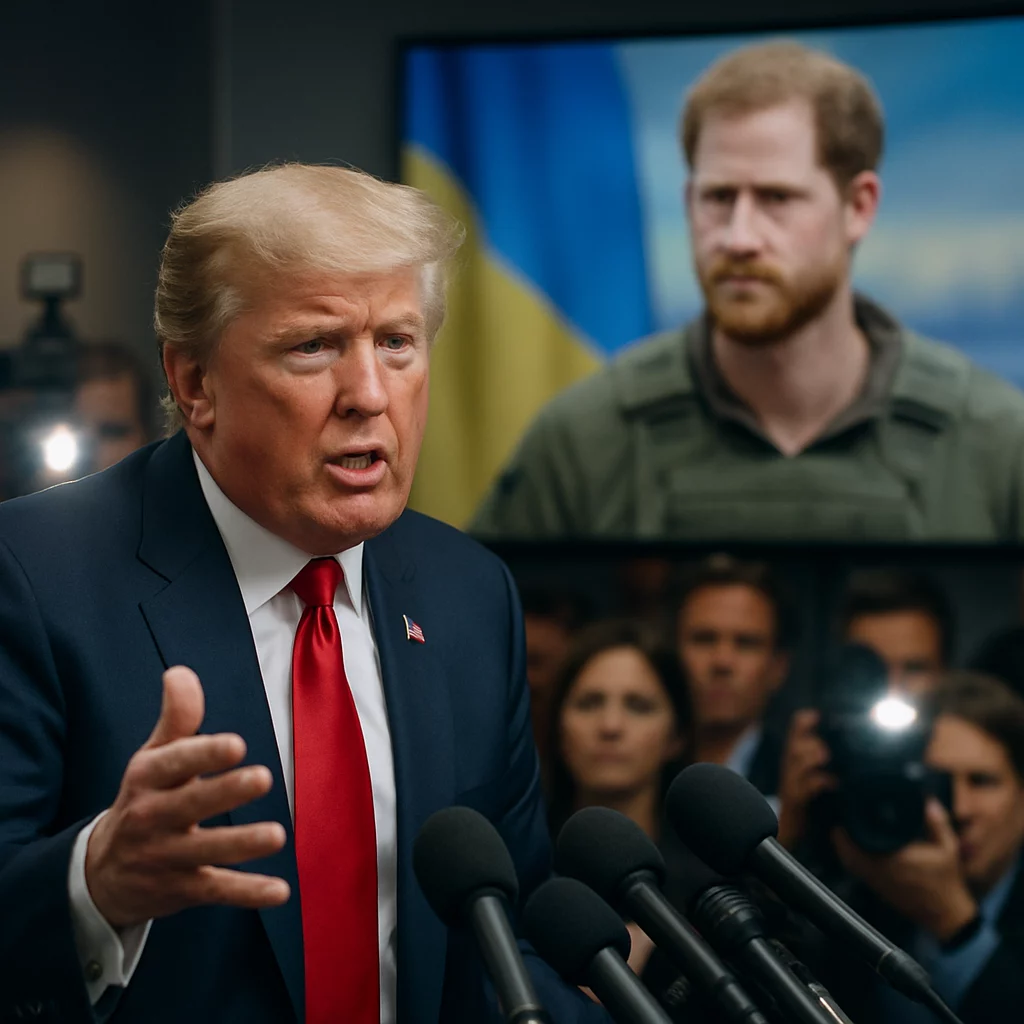
Donald Trump’s latest comments about Prince Harry have reignited a familiar debate about who gets to speak with authority on international affairs. After Harry made remarks during a surprise visit to Ukraine, Trump pushed back sharply, saying the Duke of Sussex was “not speaking for the UK” and adding a pointed personal aside about Meghan Markle. The exchange may have been brief, but it touched on much larger questions about diplomacy, celebrity influence, and the limits of public commentary.
The Power and Limits of a Public Voice
Prince Harry has become one of the most visible members of the British royal family since stepping back from official duties. That visibility gives his words unusual reach, especially on subjects like military service, veterans, and humanitarian support. Yet visibility is not the same as authority. When Harry speaks on a conflict such as the war in Ukraine, listeners often hear a blend of personal conviction, public advocacy, and royal legacy rather than formal state policy.
That distinction matters. In the modern media environment, public figures are often treated as unofficial representatives whether they want the role or not. A single statement can be amplified across continents within minutes, and the line between personal opinion and national position can blur quickly. Trump’s criticism was, in part, a reminder that even famous names do not automatically carry the mandate to speak for a nation.
Ukraine as a Stage for Global Messaging
Ukraine has become one of the world’s most charged symbolic spaces, where political leaders, celebrities, humanitarian advocates, and military voices all attempt to shape public understanding of the war. Any visit there is instantly interpreted through geopolitical lenses. When a figure like Prince Harry appears in that context, the visit is not read as merely symbolic support; it becomes part of a larger narrative about Western unity, solidarity, and public morale.
That is precisely why comments made during such trips can attract controversy. Supporters may see them as a moral stance, while critics may see them as grandstanding or diplomatic overreach. Trump’s response suggests he falls firmly into the second camp, viewing Harry’s remarks less as constructive engagement and more as an intrusion into a matter of state and international strategy.
Why the Message Landed So Sharply
Trump’s words carried more than political disagreement. By asking, “how’s his wife? Give her my regards,” he shifted the exchange into personal territory, a move that is characteristic of his communication style. Personal jabs often serve two purposes at once: they entertain supporters and sharpen the force of the criticism. In this case, the remark underscored that Trump sees Harry not as a diplomatic actor, but as a celebrity whose influence should not be confused with institutional legitimacy.
It also highlighted the unusual place Harry occupies in public life. As a prince, he remains tied to the symbolism of the British monarchy. As a private citizen, he has also built an independent global profile, one that allows him to speak on issues far beyond royal protocol. That dual identity can be powerful, but it can also create confusion about what his interventions mean and who, if anyone, they represent.
What This Says About Modern Diplomacy
The episode reflects a broader truth about today’s political communication: diplomacy no longer belongs only to governments. Influencers, former officials, entertainers, philanthropists, and royals now participate in the shaping of public opinion on international crises. This can be beneficial when it raises awareness, generates donations, or keeps humanitarian issues in the spotlight. It can also create friction when personalities begin to overshadow policy.
In that sense, the Trump-Harry clash is less about a single remark and more about the changing architecture of influence. Leaders and public figures now compete for attention in the same media ecosystem, and audiences often struggle to separate symbolic support from actual authority. That confusion can be especially pronounced in crises where facts, emotion, and political positioning collide.
For Ukraine, the stakes are not merely rhetorical. International attention can shape aid, sustain morale, and keep pressure on decision-makers. But credibility matters. When public figures enter the conversation, they can amplify concern, yet they can also invite skepticism if their role appears detached from formal responsibility. Trump’s criticism tapped directly into that tension.
The Royal Family, Celebrity, and Expectations
Prince Harry has spent years navigating the complicated space between royalty and celebrity. That dual status makes him especially newsworthy, but it also means his actions are scrutinized more heavily than those of a typical private citizen. Every appearance, interview, and statement can be interpreted as a reflection on the monarchy, the UK, or his own independent brand.
That scrutiny helps explain why Trump’s reaction resonated so widely. He was not just responding to a public comment; he was challenging the assumption that fame grants geopolitical authority. Whether people agree with him or not, the message was clear: speaking forcefully about an international conflict does not automatically make someone a representative of a nation.
The broader lesson is that influence and legitimacy are not the same thing. Public figures can draw attention to important causes and express solidarity in meaningful ways, but the world still distinguishes between advocacy and representation. As global crises continue to unfold in front of a highly connected audience, that distinction may become even more important, and it is likely to shape how audiences judge the voices that claim to speak with moral weight.
In an era when every comment can be instantly broadcast, analyzed, and weaponized, the real challenge is not simply having a platform. It is knowing how far that platform reaches, what authority it actually carries, and whether the audience hears a personal opinion, a symbolic gesture, or something more official. That uncertainty is exactly what made this exchange between Trump and Prince Harry so revealing.
Trump’s Remarks on Prince Harry Highlight the Politics of Public Voice
Donald Trump’s latest comments about Prince Harry have reignited a familiar debate about who gets to speak with authority on international affairs. After Harry made remarks during a surprise visit to Ukraine, Trump pushed back sharply, saying the Duke of Sussex was “not speaking for the UK” and adding a pointed personal aside about Meghan Markle. The exchange may have been brief, but it touched on much larger questions about diplomacy, celebrity influence, and the limits of public commentary.
The Power and Limits of a Public Voice
Prince Harry has become one of the most visible members of the British royal family since stepping back from official duties. That visibility gives his words unusual reach, especially on subjects like military service, veterans, and humanitarian support. Yet visibility is not the same as authority. When Harry speaks on a conflict such as the war in Ukraine, listeners often hear a blend of personal conviction, public advocacy, and royal legacy rather than formal state policy.
That distinction matters. In the modern media environment, public figures are often treated as unofficial representatives whether they want the role or not. A single statement can be amplified across continents within minutes, and the line between personal opinion and national position can blur quickly. Trump’s criticism was, in part, a reminder that even famous names do not automatically carry the mandate to speak for a nation.
Ukraine as a Stage for Global Messaging
Ukraine has become one of the world’s most charged symbolic spaces, where political leaders, celebrities, humanitarian advocates, and military voices all attempt to shape public understanding of the war. Any visit there is instantly interpreted through geopolitical lenses. When a figure like Prince Harry appears in that context, the visit is not read as merely symbolic support; it becomes part of a larger narrative about Western unity, solidarity, and public morale.
That is precisely why comments made during such trips can attract controversy. Supporters may see them as a moral stance, while critics may see them as grandstanding or diplomatic overreach. Trump’s response suggests he falls firmly into the second camp, viewing Harry’s remarks less as constructive engagement and more as an intrusion into a matter of state and international strategy.
Why the Message Landed So Sharply
Trump’s words carried more than political disagreement. By asking, “how’s his wife? Give her my regards,” he shifted the exchange into personal territory, a move that is characteristic of his communication style. Personal jabs often serve two purposes at once: they entertain supporters and sharpen the force of the criticism. In this case, the remark underscored that Trump sees Harry not as a diplomatic actor, but as a celebrity whose influence should not be confused with institutional legitimacy.
It also highlighted the unusual place Harry occupies in public life. As a prince, he remains tied to the symbolism of the British monarchy. As a private citizen, he has also built an independent global profile, one that allows him to speak on issues far beyond royal protocol. That dual identity can be powerful, but it can also create confusion about what his interventions mean and who, if anyone, they represent.
What This Says About Modern Diplomacy
The episode reflects a broader truth about today’s political communication: diplomacy no longer belongs only to governments. Influencers, former officials, entertainers, philanthropists, and royals now participate in the shaping of public opinion on international crises. This can be beneficial when it raises awareness, generates donations, or keeps humanitarian issues in the spotlight. It can also create friction when personalities begin to overshadow policy.
In that sense, the Trump-Harry clash is less about a single remark and more about the changing architecture of influence. Leaders and public figures now compete for attention in the same media ecosystem, and audiences often struggle to separate symbolic support from actual authority. That confusion can be especially pronounced in crises where facts, emotion, and political positioning collide.
For Ukraine, the stakes are not merely rhetorical. International attention can shape aid, sustain morale, and keep pressure on decision-makers. But credibility matters. When public figures enter the conversation, they can amplify concern, yet they can also invite skepticism if their role appears detached from formal responsibility. Trump’s criticism tapped directly into that tension.
The Royal Family, Celebrity, and Expectations
Prince Harry has spent years navigating the complicated space between royalty and celebrity. That dual status makes him especially newsworthy, but it also means his actions are scrutinized more heavily than those of a typical private citizen. Every appearance, interview, and statement can be interpreted as a reflection on the monarchy, the UK, or his own independent brand.
That scrutiny helps explain why Trump’s reaction resonated so widely. He was not just responding to a public comment; he was challenging the assumption that fame grants geopolitical authority. Whether people agree with him or not, the message was clear: speaking forcefully about an international conflict does not automatically make someone a representative of a nation.
The broader lesson is that influence and legitimacy are not the same thing. Public figures can draw attention to important causes and express solidarity in meaningful ways, but the world still distinguishes between advocacy and representation. As global crises continue to unfold in front of a highly connected audience, that distinction may become even more important, and it is likely to shape how audiences judge the voices that claim to speak with moral weight.
In an era when every comment can be instantly broadcast, analyzed, and weaponized, the real challenge is not simply having a platform. It is knowing how far that platform reaches, what authority it actually carries, and whether the audience hears a personal opinion, a symbolic gesture, or something more official. That uncertainty is exactly what made this exchange between Trump and Prince Harry so revealing.
editor's pick
latest video
news via inbox
Nulla turp dis cursus. Integer liberos euismod pretium faucibua
you might also like