
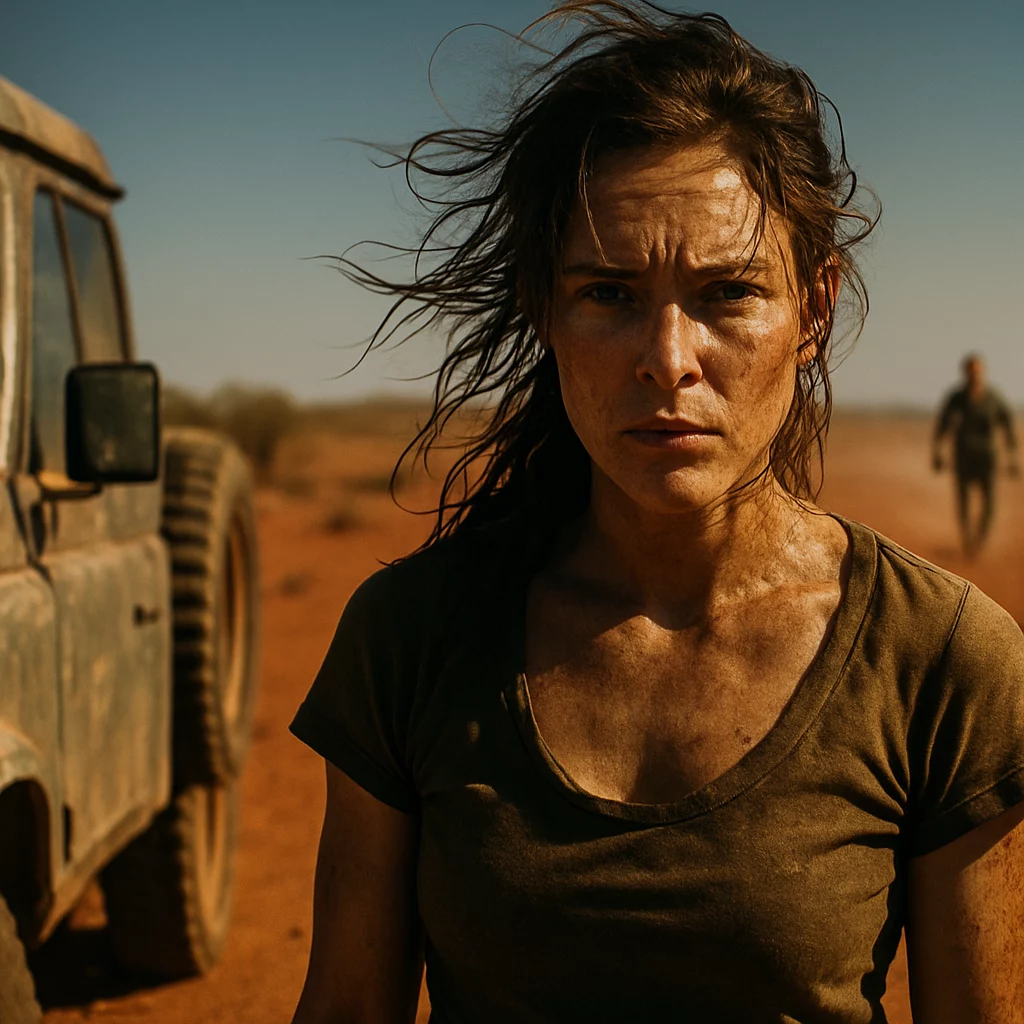
Streaming platforms have turned survival thrillers into a dependable kind of adrenaline: fast to watch, easy to market, and often stripped down to the essentials of fear, pursuit, and endurance. This Netflix thriller leans hard into that formula, sending a dangerous hunter after an equally dangerous woman across the unforgiving Australian Outback. The result is a lean, uneasy cat-and-mouse story that does not try to reinvent the genre so much as push it until the grit starts to show.
A Familiar Setup with Harsh Terrain
At the heart of the movie is a premise that feels both classic and primal: one person stalks another through a landscape that offers almost no mercy. The Outback is not just a backdrop here; it becomes a pressure chamber. Heat, distance, and emptiness all work against the characters, turning every movement into a risk. The film understands that a chase story is only as strong as the terrain that contains it, and this one uses the desert like a cruel referee.
What keeps the film moving is the unsettling imbalance between hunter and hunted. The stalker is not a polished villain with a grand speech and a neat motive. He is volatile, obsessive, and physically threatening in a way that makes each appearance feel like a fresh hazard. Meanwhile, the woman at the center of the chase is not written as helpless prey. She is resourceful, stubborn, and clearly capable of fighting back. That tension gives the story its pulse, even when the screenplay itself feels sparse.
Charlize Theron Carries the Weight
Theron is the film’s anchor, and she knows exactly how much to say with very little. Her performance depends on physicality as much as dialogue: a guarded stance, a measured glance, the exhaustion that creeps into the body without ever fully dulling resolve. She has long specialized in roles that mix elegance with danger, and here that combination works beautifully. She makes the character feel lived-in rather than constructed, which matters in a film that leaves little room for exposition.
The actor’s strength is that she does not overplay vulnerability. Even when the character is cornered, Theron keeps a spark of calculation alive. That makes the survival element feel earned. You believe she can make decisions under pressure, improvise in the dirt, and keep going after the sort of punishment that would flatten a less confident performance. In a thinner movie, that kind of presence is not just helpful; it is essential.
A Villain Built for Pure Pursuit
The antagonist, played with manic intensity, is designed less as a complex figure than as a force of disruption. The performance is loud, unstable, and deliberately unnerving. It gives the movie a volatile edge, though it also reveals one of the film’s biggest limitations: the character is often more effective as a threat than as a person. He is a moving piece of danger, and the script seems content to leave him there.
That choice is not necessarily a flaw in a survival thriller. Sometimes a story like this works best when the villain is an elemental problem rather than a psychology lecture. Still, the movie occasionally flirts with a deeper cat-and-mouse game before retreating to basics. When it sticks to action, it has bite. When it reaches for subtext, the seams begin to show.
The Outback as a Character
The setting does more than provide scenery. The open land creates a constant sense of exposure, where there is nowhere to hide and nowhere to rest. Cinematically, that makes the film feel bigger than its plot. Long stretches of empty terrain become suspenseful because they emphasize how isolated the characters are. Every footprint matters. Every sound carries. Every silhouette against the horizon suggests a possible ambush.
This is where the film’s craftsmanship earns its keep. Even if the story itself is fairly thin, the visual language understands the power of withholding. Wide shots make the characters look small and fragile. Harsh daylight turns ordinary movement into a test of endurance. When darkness arrives, it does not offer relief; it simply changes the terms of the danger. The landscape is so hostile that it nearly becomes the antagonist itself.
When Simplicity Helps and Hurts
The movie’s biggest strength is also its biggest weakness: it is stripped down to the bone. That gives it momentum and makes it easy to follow, but it also limits the emotional and thematic range. There are moments when the film seems ready to say something sharper about survival, power, and the fantasy of domination, then backs away in favor of another chase sequence. As a result, the movie lands more as a serviceable thriller than a fully satisfying one.
Even so, there is value in a film that knows its lane. Not every survival story needs to be expansive or profound. Sometimes the appeal lies in the clarity of the struggle itself: who has control, who is injured, who can still keep moving. This one understands that basic rhythm and, for the most part, respects it. It may be threadbare, but it is rarely aimless.
Why the Cat-and-Mouse Still Works
Audiences keep returning to pursuit stories because they distill fear into a readable shape. There is a runner, a pursuer, and an environment that threatens both. The drama comes from watching those roles shift, however briefly, as ingenuity replaces strength and desperation becomes strategy. That formula has endured for decades because it taps into something immediate and universal: the panic of being seen, hunted, and forced to improvise.
This Netflix thriller does not radically expand that formula, but it gives it a modern sheen through star power, severe geography, and a brutal sense of pace. If you are looking for a glossy crowd-pleaser, this is not it. If you want a compact survival story that understands how to keep tension alive in a nearly empty frame, it has enough heat and grit to hold attention. In the end, the film succeeds by making the wilderness feel indifferent, the chase feel personal, and the woman at its center feel impossible to break.
One thought on “Survival, Suspense, and the Open Wasteland”