
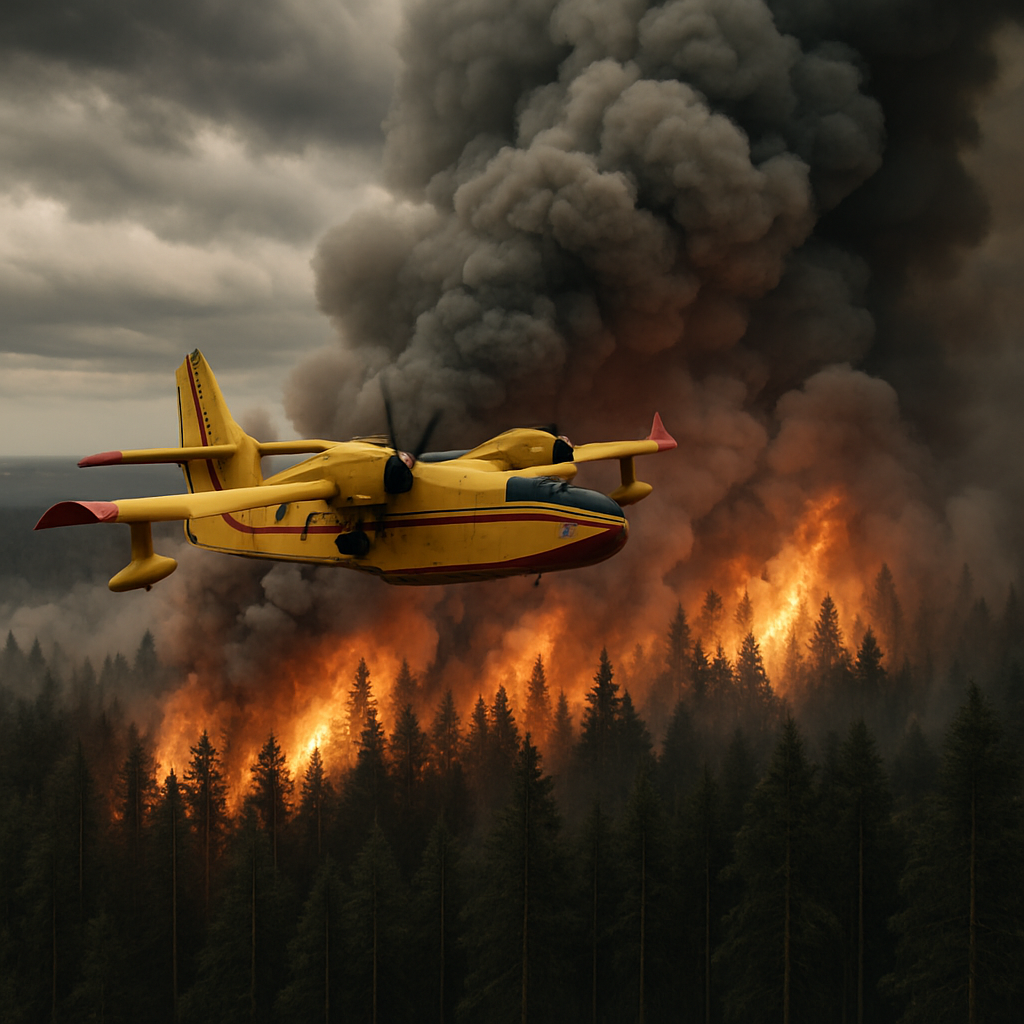
A pilot has died after a firefighting plane crashed while helping battle a major forest blaze in Poland, a tragedy that has brought fresh attention to the risks faced by emergency crews working in extreme conditions. The fire, which has already destroyed around 200 hectares of protected forest, underscores how quickly a wildfire can become both an environmental crisis and a deadly threat to those sent to stop it.
A Dangerous Mission Over Burning Forests
Firefighting aircraft are often called in when flames spread too fast for ground crews to contain. From the air, pilots guide water drops or retardant runs across smoke-filled terrain, trying to slow the advance of fire before it reaches more vulnerable areas. It is a mission that demands precision, patience, and nerves of steel. In this case, the pilot was working under intense pressure to support efforts against a blaze that had already engulfed a large stretch of protected woodland.
Wildfire aviation is among the most hazardous forms of flying. Crews must navigate low visibility, turbulent air, steep terrain, and rapidly changing weather conditions, often while operating at low altitude. When smoke columns rise and winds shift suddenly, even a highly experienced pilot can be placed in immediate danger. The crash is a sobering reminder that every drop made from the sky comes with real human risk.
Why Forest Fires Put Crews at Risk
Forest fires create a uniquely volatile environment. Heat can distort air currents, smoke can obscure landmarks, and flames can leap unpredictably through tree lines. In protected forests, where terrain may be dense and access limited, the challenge becomes even greater. Firefighting aircraft may have only seconds to line up a pass, avoid obstacles, and exit safely before entering another smoke wall or encountering severe downdrafts.
The loss of a pilot in such a mission affects more than one aircraft or one operation. It reverberates through the entire emergency response system, where crews depend on each other for coordination and trust. Air and ground teams work in close partnership, and when one part of that chain is broken, the effects are felt widely. The crash serves as a reminder that wildfire suppression is not only a battle against nature, but also an effort carried out by people putting themselves in harm’s way.
The Environmental Cost of a Growing Blaze
The blaze has already burned through about 200 hectares of protected forest, making it a serious ecological event as well as a public safety emergency. Protected forests often contain mature trees, wildlife habitats, and delicate ecosystems that can take years, even decades, to recover. When fire moves through such an area, it can destroy nesting grounds, damage soil structure, and leave species with fewer places to shelter or feed.
Beyond the immediate damage, fires in conservation areas can alter the long-term health of the landscape. Charred ground is more vulnerable to erosion, and weakened vegetation may struggle to regenerate. If the fire spreads deeper into the area, recovery becomes even more complex, requiring sustained environmental monitoring and restoration work. For local communities, the loss is not just visual; it can affect tourism, biodiversity, and the sense of connection people feel to nearby natural spaces.
Emergency Response Under Pressure
Large forest fires often require a coordinated response from firefighters, aviation specialists, dispatch teams, and local authorities. Decisions must be made quickly, including where to deploy aircraft, how to protect personnel on the ground, and which zones pose the greatest threat. In such fast-moving situations, weather updates, fuel supplies, flight paths, and landing options all become critical pieces of the operation.
Aircraft are especially valuable when flames move into areas that trucks and crews cannot easily reach. Yet their effectiveness depends on careful timing and safe conditions. If smoke thickens or the fire changes direction, pilots may be forced to abort a run or take evasive action. The death of the pilot highlights the tension at the heart of wildfire response: the need to act aggressively enough to save forests and communities, while never losing sight of the fragility of the people carrying out the rescue.
As the fire continues to be assessed and response teams work to contain it, the incident stands as a powerful reminder of the cost of protecting the natural world. Forests can be replanted and habitats restored, but the loss of a life in the line of duty leaves a deeper mark. In moments like this, the bravery of emergency crews becomes unmistakable, and so does the need to support them with the best training, equipment, and safeguards possible.
2 thoughts on “Pilot Killed After Firefighting Plane Crashes During Poland Forest Blaze”